
First-hand experiences from a celiac traveler and clinician
By Krystal, FNP-BC · Celiac Safe Travel
Important Disclaimer: What follows reflects my family’s personal experience and routines at a specific point in time. Restaurant menus, staff training, and food handling procedures change constantly. Always verify celiac safety protocols directly with each establishment before ordering. This post is not a guarantee of safety and should not replace your own due diligence. Trust your instincts — if something doesn’t feel right, don’t eat it.
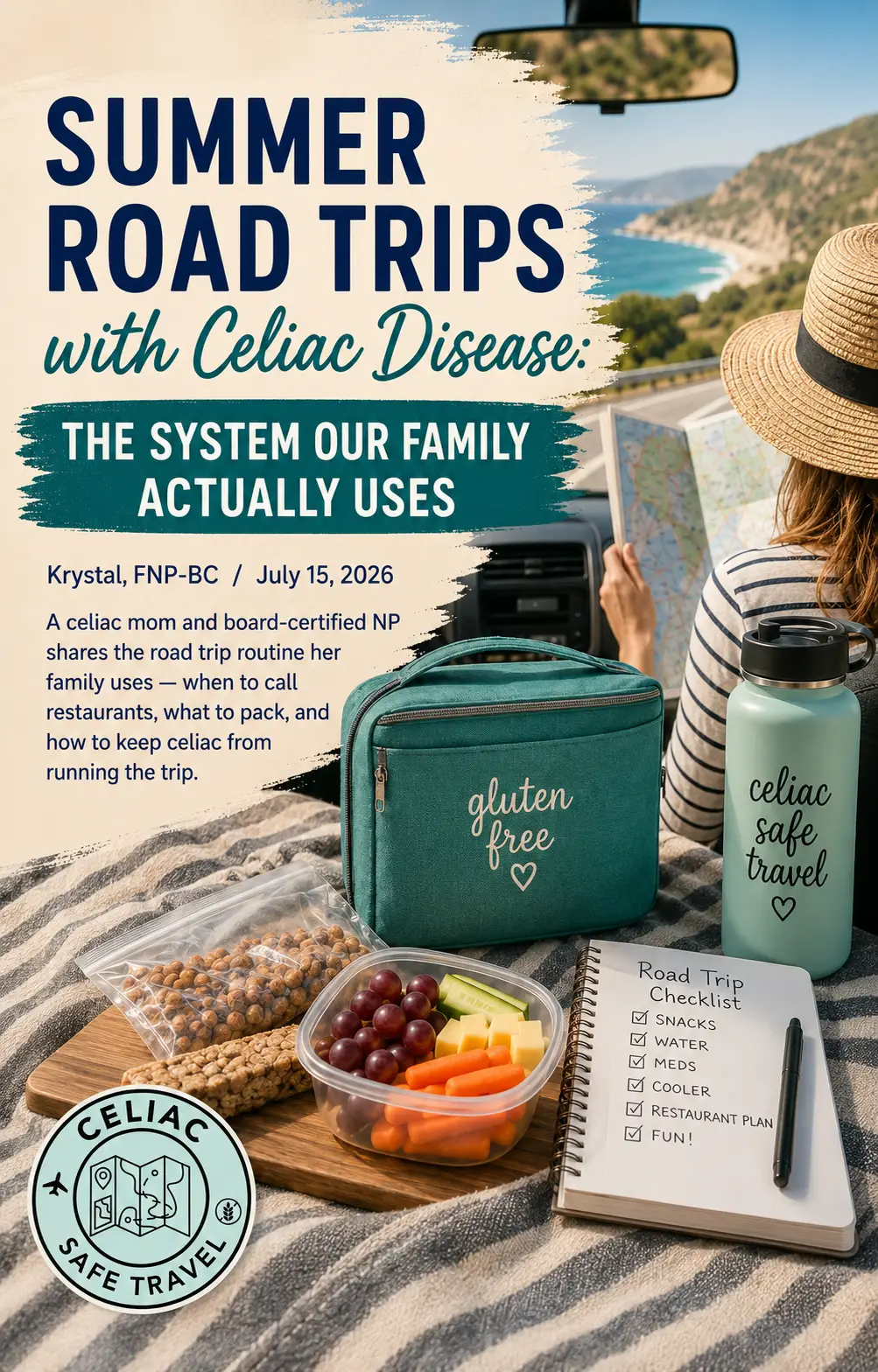
My daughter and I both have celiac disease, and we just got back from a trip up the Maine coast. Summer road trips used to feel like a series of food emergencies connected by scenery. They don’t anymore — not because the risk disappeared, but because we built a routine that carries the load for us.
Every time I share pieces of this system, the response tells me how many families are wrestling with the same things. So here’s the full version.
1. Call restaurants between 2 and 3pm — never at dinner
You get a completely different conversation at 2:30 than you do at 6:30. Mid-afternoon, someone has time to actually walk to the kitchen and ask; at dinner rush you get a distracted host with a line out the door.
And the phone call is a screening tool in itself. If the person who answers doesn’t know what a shared fryer is — and can’t find anyone who does — that tells you everything you need to know before you’ve driven twenty minutes and sat down.
We learned this one the hard way on this very trip: we sat down at a restaurant that looked promising, talked to the staff, and left before ordering. No meal is worth eating anxious. Calling ahead would have saved us the stop.
(A former restaurant hostess once confirmed this timing for me: between 2 and 4, she said, was when she actually had the time to help someone properly. Take it from the person who answered the phones.)
2. Use the word “celiac,” not just “gluten free”
I know this debate well, and I’ll keep making the case: the word matters. “Gluten free” can be heard as a preference. “Celiac” is heard as a medical condition, and in most trained kitchens it triggers a different protocol.
On this trip, we told a gelato shop in Brunswick that we have celiac, and they pulled a brand-new sealed container from the back and grabbed a clean scoop — without us asking. That’s what the right word can do. (Here’s the full story.)
If you’re not sure what to say at the table, we keep word-for-word restaurant scripts for exactly this.
3. Book a kitchen for at least part of the trip
Breakfast is the meal least worth gambling on and the hardest to find safe on the road. Our rule: groceries the first night, breakfast in every morning. It removes one high-risk meal per day, and it takes the pressure off when a dinner plan falls through — because on every trip, one does.
4. Pack the cooler like it’s a family member
Ours rides in the back seat, not the trunk, stocked with real backup food — enough to replace a meal, not just snack through a delay. On this trip, GF mac and cheese saved a night when we couldn’t find anything we trusted. Nobody cried over dinner in a hotel room; that’s a win.
5. Apps and reviews give you candidates, not clearance
A January review means nothing in July, when the entire summer staff turned over a month ago. We use apps and community recommendations to build a shortlist, then re-verify every single time — even at places we’ve eaten before. The re-verification is the routine. It never gets skipped, and honestly, that’s what lets the rest of the trip feel relaxed.
The part nobody puts in a list
The mental load of celiac travel is real, and it doesn’t fully go away. But a routine means the load is carried by the system instead of by you, in the moment, at the counter, with a hungry kid. Kids read your stress. The calmer the system, the better the trip — for everyone.
If you’re planning your first big trip since diagnosis, start with our free Celiac Travel Starter Guide — the checklist version of everything above.
What does your family’s routine look like? Tell us in the Facebook community — the best ideas on this site started as tips from other celiac families.
Join the conversation in our Facebook community · Follow @celiacsafetravel on Instagram
Medical Disclaimer: This post is written from personal experience and community reports. It is not medical advice. The author is a board-certified Family Nurse Practitioner sharing personal travel experiences, not providing clinical guidance. Restaurant safety protocols change. Always perform your own due diligence before eating at any establishment. Celiac Safe Travel and its author assume no liability for adverse reactions resulting from dining at any establishment mentioned in this post.